1. Cable tray structure type selection
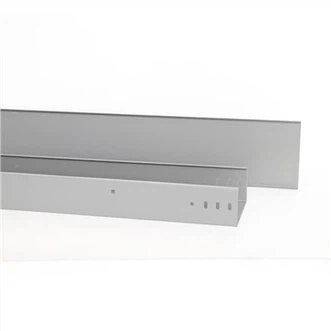
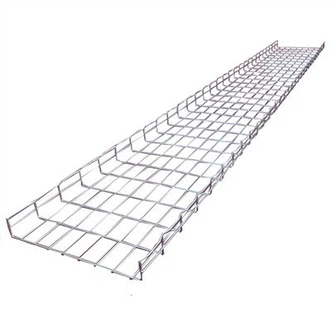
In engineering design documents, cable trays are generally referred to as "bridge trays" without specifying specific structural features. The prices of cable trays of different types and materials vary greatly, and the confusion of structure types will bring about heat dissipation at the work site. , mechanical protection problems. Therefore, in the design stage, the designer should be required to reasonably select the structural characteristics of the cable tray according to the characteristics of the engineering environment and technical requirements, and express them clearly in the model marking and material table of the floor plan.
2. Cable tray material selection
The material of cable tray is another common problem in cable tray engineering design. According to the material, the cable tray is mainly made of steel, glass fiber reinforced plastic and aluminum alloy. FRP cable tray is characterized by light weight and only 1/4 of the specific gravity of carbon steel; good water resistance and corrosion resistance, suitable for chemical plants. It is not easy to burn, and the oxygen index of the flame-retardant fiberglass cable tray is ≥32. Long service life, the general design life is 20 years, but the price is 3 times that of steel cable tray. The advantages of construction lie in the convenience of cutting, flexible assembly, and no need for fire during installation. This is especially significant for chemical plant projects in explosive hazardous environments and with tight construction schedules, because in explosive hazardous environments, chemical plants must be shut down during hot installation, which is economical. Benefit will be affected. The aluminum alloy cable tray is also very light in weight. Due to the different proportions of aluminum and steel (Al=2.7, Fe=7.86), the ratio of aluminum to steel is about 1:3 by weight. The dimensions and load characteristics of aluminum alloy cable trays are basically similar to those of steel trays. In terms of cost, the cost of aluminum alloy cable tray is 20% higher than that of galvanized steel cable tray, and the service life is more than 5 times that of steel cable tray.
3. Category selection of anti-corrosion layer on the surface of cable tray
The third common problem in engineering design is that the type of cable tray is not marked with the type of anti-corrosion layer, and there is no unified text description. This problem has lessons in reality. For example, in a project in Indonesia that my country undertakes the general contract, the surface anti-corrosion treatment of the steel cable tray has not been subjected to salt spray tests. Soon after the completion of the bridge, the corrosion is quite serious and has to be replaced. The surface anti-corrosion layers of cable trays mainly include hot-dip galvanizing, galvanized nickel, cold galvanizing, powder electrostatic spraying, etc. According to the manufacturer's data, the service life of hot-dip galvanizing process is not less than 40 years, which is suitable for outdoor heavy corrosion environment. High; the life of galvanized nickel process is not less than 30 years, and it is also suitable for outdoor heavy corrosive environment, and the cost is high; the life of cold galvanizing process is not less than 12 years, suitable for outdoor light corrosive environment, and the cost is average; the life of powder electrostatic spraying process is not less than 12 years, suitable for indoor dry environment at room temperature, the price is average. The designer should reasonably select the type of surface anti-corrosion layer of the cable tray according to the engineering environmental conditions, and express it clearly in the design documents.
4. Fire rating selection of cable tray
In the section with fire protection requirements, the cable tray can be added with fire-resistant or flame-retardant boards, nets and other materials in the cable ladder and tray to form a closed or semi-closed structure. For measures such as painting fire-resistant coatings, the overall fire-resistant performance should meet the requirements of relevant national codes or standards. In places with high engineering fire protection requirements, aluminum alloy cable trays should not be used.
Under the same specifications, the flame-retardant cable tray is 2.2 times more expensive than the steel cable tray, the service life is more than 5 times that of the steel cable tray, and the weight is 30% heavier than the steel cable tray. The fire-proof cable tray is slightly more expensive than the steel cable tray, the service life is more than 3 times that of the steel cable tray, and the weight is basically the same as the steel cable tray.

5. Selection of Filling Rate of Cable Tray
The selection of the width and height of the cable ladder and tray should meet the requirements of the filling rate. The filling rate of the cable ladder and tray is generally 40% to 50% for power cables and 50% to 70% for control cables. And it is advisable to reserve 10% to 25% of the project development allowance.
6. Selection of Load Class of Cable Tray
When selecting the load level of the cable tray, the working uniform load of the cable tray should not be greater than the rated uniform load of the selected cable tray load level. If the actual span of the support and hanger of the cable tray is not equal to 2m, the working average The cloth load should meet the requirements. Under the condition that various components and supports and hangers meet the corresponding load, their specifications and dimensions should be matched with the straight section and curved through series of pallets and ladder frames.
7. Specification and size selection of cable tray
In engineering practice, the problem in the selection of the specifications and dimensions of the cable tray is either too large or too tight. How to choose the size of the cable tray reasonably? Articles 8, 10, and 7 of "Code for Electrical Design of Civil Buildings" (JGJ16-2008) stipulate: "The ratio of the total cross-sectional area of the cable to the cross-sectional area in the tray shall not exceed 40% for power cables and 50% for control cables. "
8. Select cable tray according to cable bend radius
When selecting the bend-through or lead-up and lead-down devices of the cable tray, it should not be less than the minimum allowable bending radius of the cables in the cable tray.
9. Questions about material statistics
The main problems of design drawings in material statistics:
1) Missing items. Some bracket materials only count the straight part, and the curved part is not counted; some material lists simply do not have an item of support and hanger. For the general engineering contracting company, the consequence of missing items is that the quotation is low in the project quotation stage, and the procurement department always signs supplementary contracts with suppliers in the project execution stage, which leads to a decrease in the profit of the general contracting company.
2) Wrong item. The reason is that many designers are not clear about some concepts, some consider the bend and hanger as accessories, and some consider the cover plate as the main material. In fact, the "bracket" of the cable tray includes both straight-through and bent-through parts. The "accessories" of the cable tray include various connection plates, cover plates, partitions, pressure plates, terminal plates, lead-down parts, fasteners, etc. The accessories are not listed in the material table, and are supplied by the supplier with the goods. The cost is included in the unit price of the bracket, and the supplier does not need to quote separately in the project. The "support and hanger" includes support arm, column, hanger, etc., which need to be listed separately, and the supplier in the project needs to quote separately.
3) The statistical deviation is large, usually the number is too small. So how to accurately count the materials of the cable tray in the project quotation? Generally speaking, a 1% to 2% margin can be considered for the straight-through part of the bracket, and the number of bend-through parts is directly counted. Divide the total length of the bridge frame by the average column spacing (the outdoor column span is generally 6m, and the indoor column span is generally 3m) to obtain the number of columns, and increase the margin by 2% to 4%. The total length of the bridge frame is divided by the average spacing of the supports and hangers to obtain the number of supports and hangers, and then a 1% to 2% margin is considered. As for the spacing of the supports and hangers, the spacing of the supports and hangers in the indoor straight section is generally 1.5 to 3m, and the spacing of the supports installed vertically is not more than 2m. The support and hanger configuration of the non-linear section should comply with the regulations: when the bending radius of the bend is less than 300mm, a support and hanger should be set on the side of the straight section 300-600mm away from the junction of the non-linear section and the straight line; when the bending radius of the bend is less than 300mm When not less than 300mm, in addition to setting a support and hanger on the side of the straight section 300-600mm away from the junction of the non-linear section and the straight line, a support and hanger should be added in the middle of the non-linear section.