Zhenjiang ACE Electric Group CO., LTD

Busbar

What is Busbar?


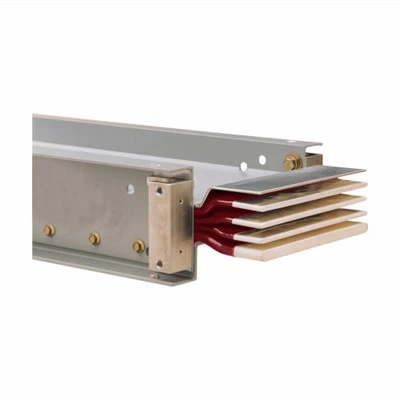
A busbar is a metallic strip or bar used to conduct electricity within an electrical power distribution system. Busbars are commonly found within switchboards, panelboards, and other types of electrical enclosures. They provide a low-resistance path for electrical current to flow, minimizing losses due to resistance and voltage drop. Busbars can be made of various materials such as copper, aluminum, or brass, and their shape and size depend on the current-carrying capacity and the application requirements.

Why Choose Us

Professional service

The company has a perfect customer service, the service into every detail of the work.

Quality assurance

Our expertise in Cable Tray Accessories manufacturing ensures that our products are always of the highest quality.

Delivery On Time

Our team is committed to providing timely and efficient delivery, ensuring that your orders arrive on time and in perfect condition.

24h online service

You can contact us to inquire about pre-sales, sales, and after-sales services, and we will give you a very satisfactory We are at your service online 24 hours a day.

  • Compact Busbar

    Compact Busbar

    Rated Voltage ---690V. Rated working current: 250-5000 A

    Add to Inquiry
  • Resin Casted Busbar

    Resin Casted Busbar

    Rated Voltage ---690V or other. Rated working current: 630-6300 A

    Add to Inquiry
  • Cast Resin Busbar

    Cast Resin Busbar

    Rated Voltage ---690V or other. Rated working current: 630-6300 A

    Add to Inquiry


Advantages of Busbar


1. Compact design

Cable requires large bend radii that take up a lot of space. The compact nature of the busbar also ensures that the tightly compressed conductors inside the busbar are isolated and reliable. Tangles of cables are unsightly and due to the busbar’s compact and sleek design it is more efficient and also easy on the eye!

2. Flexibility

Busbar is able to fit in any structure and has a more modular design than cables. Busbars can be relocated without needing to spend large amounts of money, and they can be modified to fit into any additional space. Busbar can be added to, reconfigured or replaced when required with minimal interruption for both the client and the service they provide.

3. Better resistance

Within the casing of the busbar, there is a minimum distance between each conductor which reduces the induction of resistance. Busbar also has lower density levels due to a thin flat tire that helps in optimal distribution of density of current, and reduces resistance. Due to this, the voltage loss from the busbar is much lower than it would be for cables.

4. Quicker and safer installation

A busbar system is designed to fit the space required prior to its installation on site. Busbars can be installed quickly, efficiently and with ease resulting in reduced on-site costs.On the other hand, busbar systems are assembled quickly and efficiently, and installers can install up to 10 metres of busbar at a time. No special tools are required for busbar installations. The joints, lengths and accessories are simply bolted or screwed together.

Types of Busbar
productcate-800-450
01

Solid busbar

A solid busbar is a flat, rectangular strip or bar of conducting material, such as copper, brass, or aluminum, used as a conductor in an electrical power distribution system. It is called solid because it is a single, continuous piece of material without any joints or breaks.

02

Tubular busbar

Tubular busbar is a type of electrical conductor that is cylindrical in shape and has a hollow center. It is made of copper or aluminum and is used instead of traditional solid busbars in high current applications. It offers better heat dissipation and requires less space compared to solid bars of the same current capacity.

productcate-800-450
productcate-800-450
03

Sandwich busbar

Sandwich busbars are commonly used in high current applications where traditional busbars may not be adequate. They offer a compact, low impedence and high capacity alternative to traditional busbars. Their high temperature, shock resistance and reliability make them a popular choice in power distribution systems.

04

Laminated busbar

Laminated Busbars are engineered components consisting of layers of fabricated copper separated by thin dielectric materials, laminated into a unified structures. Laminated busbars are mainly used for connection between IGBT's and support capacitor.

productcate-800-450


productcate-626-468


Material of Busbar

Busbars are typically made from copper or aluminum, although other materials such as steel or brass can be used in certain applications. Copper is preferred for most applications due to its superior conductivity and corrosion resistance. However, aluminum is sometimes used for its lower cost and lighter weight. The choice of material will depend on factors such as the specific application, required voltage and current ratings, and environmental conditions.

Components of Busbar

A busbar typically consists of a main conductor, insulators, support structures, and connections. The main conductor is the large, solid piece of copper or aluminum that carries the electrical current. Insulators are used to separate the busbar from other conductive materials. Support structures provide stability and help to secure the busbar in place.

productcate-640-480
Application Of Busbar
 

Marine

Busbars are commonly used in boats and other marine vessels to distribute power to multiple electrical devices, such as lights, pumps, and radios.

RV and camper van

In RVs and camper vans, busbars are used to distribute power to multiple electrical devices, such as lights, refrigerators, and entertainment systems.

Automotive

In cars and trucks, busbars are used to distribute power to multiple electrical devices, such as radios, speakers, and dashboard displays.

Solar power systems

Busbars are used in solar power systems to connect multiple solar panels together and distribute power to the battery bank.


Process of Busbar


Cutting:The first step is to cut the busbars to the desired length using specialized machinery such as a guillotine cutter, bandsaw, or CNC-controlled plasma cutter.


Drilling:Once the busbars have been cut to the required lengths, holes are drilled into them using a drill machine. Holes are necessary for attaching other components or for connecting the busbars together.


Bending:Busbars may need to be bent to fit specific shapes or dimensions. This process is done using a specialized hydraulic press that creates the necessary shape and angle through the application of pressure and heat.


Punching:Punching is essential for creating holes that are required for making electrical connections. Busbar punching machines are used to make different types of holes such as square, round, or rectangular shapes.


Bus maintenance and precautions
1. Clean regularly

Busbars tend to accumulate dust, dirt and other impurities during operation. These impurities will reduce the conductivity of the busbars and even cause safety accidents such as fires. Therefore, the busbar needs to be cleaned every once in a while. When cleaning, use a clean cloth or sponge dipped in a small amount of detergent, gently wipe the busbar surface, and dry it with a clean cloth.

2. Regular testing

Regular testing is required during bus operation, including thermal resistance testing, contact resistance testing, etc. These tests can detect problems in the busbar in time and carry out timely repair and treatment. At the same time, it is also necessary to check the inside of the busbar regularly to ensure that there are no foreign objects and impurities inside the busbar.

3. Regular anti-corrosion

Since the busbar has been running in complex environments such as humidity and high temperature for a long time, it is prone to rust and corrosion. Therefore, the busbar needs to be anti-corrosion treated before installing it. At the same time, regular inspection and maintenance are required to ensure that the anti-corrosion layer of the busbar is intact.

4. Pay attention to maintenance

When performing busbar maintenance, you need to be careful and conscientious, and deal with problems in a timely manner. At the same time, attention should be paid to keeping the busbar clean and dry. Perform regular maintenance on the busbar to extend its service life.


How to Choose Busbar


Busbar material
The first and foremost consideration when choosing a busbar is the material used in its construction. There are various materials available in the market, each with its own set of advantages and disadvantages. Common materials include aluminum, copper, and steel. Aluminum busbars are lightweight, corrosion-resistant, and have a low melting point, making them ideal for use in outdoor applications.


Busbar size
The size of the busbar plays a crucial role in determining its performance. The size is directly proportional to the amount of current it can carry. It is, therefore, essential to choose a busbar size that matches your specific requirements. You should consider factors such as the expected load, the voltage drop, and the available space in your electrical system.


Busbar shape
Busbars come in various shapes, such as straight, l-shaped, t-shaped, and u-shaped. The shape you choose will depend on your specific application requirements. For example, straight busbars are ideal for linear installations, while l-shaped and t-shaped busbars are suitable for making connections between different components.


Busbar manufacturer
The quality of a busbar is highly dependent on the manufacturer. It is essential to choose a reputable manufacturer that uses high-quality materials and follows strict manufacturing standards. You should research the manufacturer's reputation, product quality, and after-sales service before making a decision.


Components of Busbar
 

Conductors
The conductors are the core components of busbar, responsible for carrying electrical current. They are typically made of aluminum or copper, chosen for their high conductivity properties. Aluminum busbars are lightweight, corrosion-resistant, and have a lower cost per unit length compared to copper busbars.


Insulators
Insulators are an essential part of busbar systems, providing electrical separation between conductors and ground. They are typically made of materials like polymeric insulators, porcelain, or glass, chosen for their high dielectric strength and resistance to environmental factors like moisture and temperature.


Connectors
Connectors are used to join busbars together, forming a continuous path for electrical current. They are designed to ensure secure and reliable.


How to Maintain Busbar
Cast Resin Busbar

Regular inspection

The first step towards maintaining busbar is to conduct regular inspections. Busbar, being a vital component of the electrical system, requires regular inspection to ensure its proper functioning. The inspection should be carried out by a qualified electrician who can identify any potential issues in the busbar system.

Resin Casted Busbar

Cleaning and maintenance

Busbar maintenance also includes cleaning and lubrication. The cleaning process should be carried out using a suitable cleaning agent, such as a mild detergent or an approved cleaning solution. The cleaning agent should be applied to the busbar surface and allowed to sit for a few minutes before being wiped off with a clean cloth.

Compact Busbar

Checking the alignment

Busbar alignment is crucial for ensuring its proper functioning. Regular checks should be conducted to ensure that the busbar is aligned correctly. Any misalignment can lead to increased resistance, overheating, and potential fire hazards.


Compact Bus Duct

Periodic testing

In addition to regular inspections and maintenance, periodic testing of the busbar system should also be conducted. This testing should be carried out by a qualified electrician and should include a variety of tests, such as resistance testing, capacitance testing, and insulation resistance testing.


How to Install Busbar


Preparation
Before starting the installation, it is essential to prepare the workspace and gather all the necessary tools and materials. This includes checking the electrical system, ensuring that all the switches and circuit breakers are turned off, and disconnecting the power supply. The workspace should be well-lit and free of any debris or obstacles that may hinder the installation process.


Determine the busbar layout
The first step in installing busbar is to determine the layout of the busbar system. This includes identifying the location of the busbar and the position of the busbar connections. The layout should be in accordance with the electrical system design and should take into account the location of the loads, the size of the busbar, and the number of connections required.


Install the busbar supports
Once the layout is determined, the next step is to install the busbar supports. These supports are used to secure the busbar in place and should be installed in accordance with the manufacturer's instructions. It is essential to ensure that the supports are securely fastened to the walls or ceilings and are aligned correctly.


Install the busbar
Once the supports are installed, the next step is to install the busbar itself. This involves connecting the busbar to the supports and ensuring that it is securely fastened in place. It is important to use the correct size and type of busbar for the specific application and to ensure that the connections are made in accordance with the manufacturer's instructions.


Connect the busbar to the electrical system
The final step in installing busbar is to connect it to the electrical system. This involves connecting the busbar to the circuit breakers or switches and ensuring that all the connections are secure. It is essential to check all the connections to ensure that they are tight and properly secured.


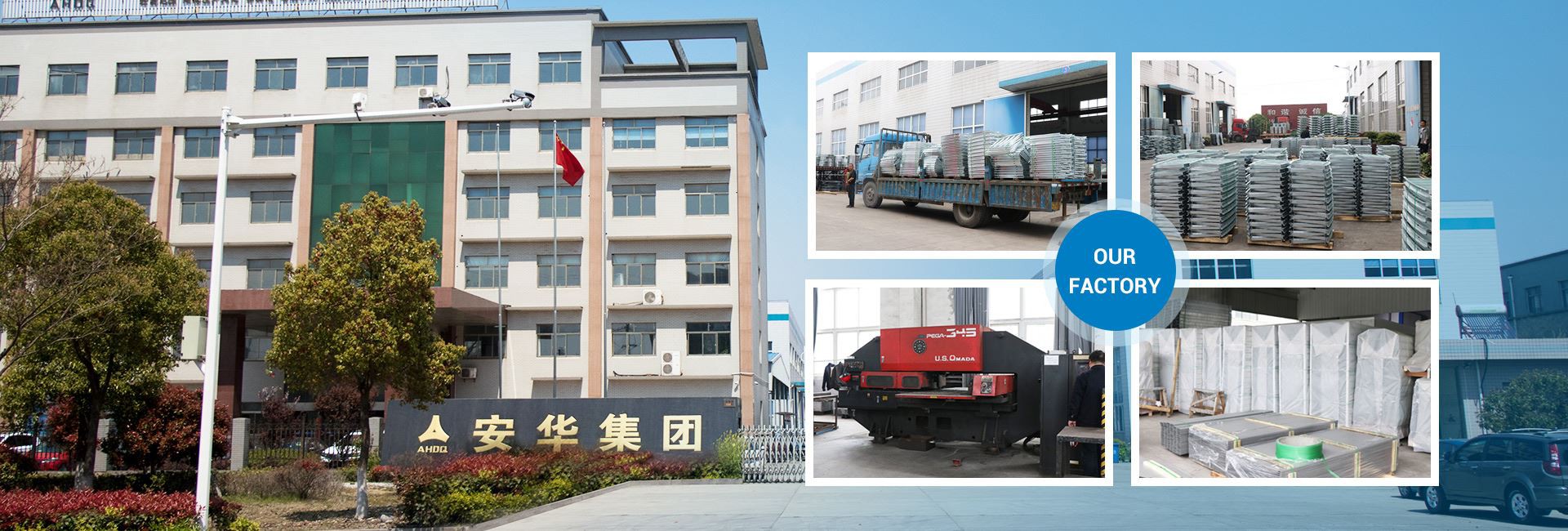
Our Factory


Our company –Anhua mainly produces cable trays, busways and etc.
Our company is a provincial star enterprise, a secondary measurement enterprise and a super credit enterprise. In 2002, the company passed the ISO9001-2000 quality system certification. In 2005, the bus duct and switchgear passed the national 3C compulsory certification.


productcate-1-1

productcate-1-1

FAQ

Q: What is a busbar used for?

A: A busbar is an electrical junction used for collecting electric power from the incoming feeders and distributes them to the outgoing feeders. The main purpose of a busbar is to carry electricity and distribute it. Busbars are used to make the systems more efficient.

Q: Why do you need a bus bar?

A: In essence, busbars are used wherever there's a need for efficient, reliable, and flexible power distribution. They help manage power loads, ensure safety, and reduce costs by replacing multiple conductors with a single busbar.

Q: What is the difference between a busbar and a cable?

A: Quite often, busbars have no insulation—they're protected by a separate enclosure. Cables can't have insulation when used for ground connections; more typically, they have an outer jacket that provides electrical isolation and shock protection.

Q: What is a busbar in power station?

A: In electric power distribution, a busbar (also bus bar) is a metallic strip or bar, typically housed inside switchgear, panel boards, and busway enclosures for local high current power distribution.

Q: Why busbar is used instead of wire?

A: There are several advantages of using a busbar over traditional cables, including: Lower voltage drop: Busbars have lower electrical resistance than cables, which means that they experience less voltage drop over long distances. This makes them more efficient for transmitting electricity over longer distances.

Q: What is the difference between a relay and a bus bar?

A: Relay helps in switching high voltages by manipulating low voltages. An electrical bus bar is defined as a conductor or a group of conductor used for collecting electrical energy from the incoming feeders and distributes them to the outgoing feeders.

Q: What is the voltage of a busbar?

A: Busbar system (Medium Voltage - Cast Resin Busbar) is designed to perform at 12 kV and 24 kV. It is manufactured for use up to 5700 A as a standard application.

Q: Where are busbars installed?

A: Overhead busbars fix to ceilings or walls, while underfloor busbars sit inside the cavities in raised access floors. The term “busbar” can also refer to large uninsulated metallic strips employed in industrial applications to distribute local high-current power.

Q: How do I choose a busbar size?

A: THUMB Rule for Busbar : For Aluminium : 0.7 Amps / 1 Sq.mm of Bar. For Copper : 1.2 Amps / 1 Sq.mm of Copper.

Q: What are the two types of busbar?

A: Such type of arrangement uses two type of busbar namely, main busbar and the auxiliary bus bar. The busbar arrangement uses bus coupler which connects the isolating switches and circuit breaker to the busbar.

Q: Do I need a positive and negative bus bar?

A: Busbars can make your installation look very professional and having all your connections neatly and logically arranged in one place makes fault finding and circuit checking much easier. Separate busbars must be used for the connections on the positive and negative sides.

Q: Why do bus bars protect?

A: The busbar protection relay is intended for use in high-impedance-based applications within utility substations and industrial power systems. The relay can also be utilized in restricted earth-fault and residual earth-fault applications for the protection of generators, motors, transformers and reactors.

Q: Can you touch a busbar?

A: If you hang from a busbar with any part of your body touching nothing will happen. But you touch busbar while standing the ground, there is a contact between the line to ground and there will create a L-G fault.

Q: What material is a busbar made of?

A: Busbars are solid metal bars used to carry current. Typically made from copper or aluminum, busbars are rigid and flat — wider than cables but up to 70 percent shorter in height. They can also carry more current than cables with the same cross-sectional area.

Q: Why is busbar flat?

A: Busbars have a minimum distance between the conductors which in turn reduces the induction of resistance. Busbars also have a thin and flat tire which helps in optimal distribution of density of current and in turn reduces resistance.

Q: How long can a busbar be?

A: Typical busbar max out at 12 feet long. We can manufacture busbar up to 20 feet in length. Don't limit your electrical designs by using shorter lengths that must be spliced together; longer busbar means fewer joints and easier assembly on-site.

Q: Which protection is used for busbar?

A: Centralized busbar protection: Busbars can be protected using centralized busbar protection. In this solution, all copper wires from current transformers and status of disconnectors, as well as the tripping circuits to the circuit breakers, are connected to a central panel, where the busbar protection IED is installed.

Q: Which relay is used for bus bar?

A: Busbar protection schemes work in such a way that it incorporates differential relays. The relay might be either a high impedance differential relay or a low differential relay. High differential relay when used is also referred to as high impedance busbar protection.

Q: Why is busbar rectangular?

A: Conducting Capacity: Busbars are used to carry and distribute large amounts of electrical current from one point to another. The rectangular shape offers a larger surface area compared to a circular shape with the same cross-sectional area.

Q: Why is busbar insulated?

A: The use of insulated copper conductors can enhance your design by minimizing circuit footprints and reducing turning radii, while eliminating creepage and clearance issues, resulting in more watts with less space.

As one of the most professional busbar manufacturers and suppliers in China, we're featured by quality products and good service. Please rest assured to wholesale customized busbar made in China here from our factory.

isolator busbar, busbar panel, 400a bus bar
goTop

(0/10)

clearall