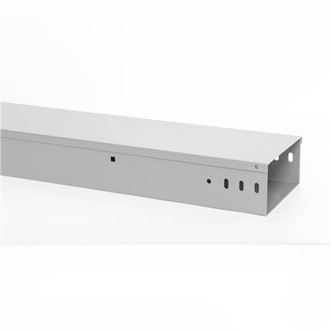
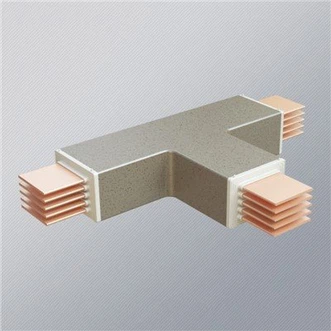
1. Determine environmental conditions There are generally three types of environmental conditions: corrosive environment, normal environment, and special environment.
2. According to the direction of most cables, you can go along the columns, beams and floors indoors, and go along the process pipes as much as possible outdoors.
3. Calculate the load Calculate the weight q and total load G of the cable per unit length of the cable tray on the cross section
G total=n1q1+n2q2……nnqn In the formula: q1·q2·q3……qn is the unit weight of each cable (kg/m)
n1·n2·n3……nn is the same number of cables
G total < G allow (for the allowable load of the cable rack, please refer to the load curve chart)

4. Select the bridge according to the cable load and the environment where the bridge is installed, and based on the load curve of the bridge to determine the type and specification of the bridge, the spacing of the columns, the length of the arms, the level of the bridge, and the length of the column.
5. Determine the fixing method of the bridge frame according to the direction of the cable and the installation environment; suspension type, vertical type, (both types can be fixed on one side or on both sides), wall-side type, etc.
6. Layer arrangement and interlayer distance of various cables on the cable tray.
The arrangement of the cable tray level is: the weak current control cable is on the top layer, and then the general control cable, low-voltage power cable, and high-voltage power cable are arranged in sequence at the bottom: as shown in the following table: This arrangement is conducive to shielding interference ventilation, heat dissipation, etc.